
Knowing how to say sorry in Thai can save you from uncomfortable situations and help you connect with locals. This guide covers essential Thai apology phrases like khaf hak, pronunciation tips, and the cultural context behind apologies in Thailand. You will learn practical ways to express regret, understand Thai manners, and use humor to lighten the mood after a sincere apology.
This is a comprehensive guide about how to say sorry in thai.
Key Takeaways
- Core Phrase: The most common way to say sorry in Thai is “khaf hak” (ขอโทษ), and it works in almost every situation.
- Politeness Matters: Adding polite particles like “kha” (for women) or “khrap” (for men) shows respect and sincerity.
- Cultural Context:Thais value harmony and saving face, so a genuine apology goes a long way in building trust.
- Body Language:Pairing your words with a wai gesture makes your apology feel more authentic and respectful.
- Humor Helps:Lightening the mood with a friendly joke can repair relationships after a minor mistake.
- Practice Daily:Repeating these phrases aloud will help you remember them when you need them most.
[FEATURED_IMAGE_PLACEHOLDER]
Traveling to Thailand or chatting with Thai friends? At some point, you will need to know how to say sorry in Thai. Mistakes happen. You step on someone’s toes, mix up someone’s name, or accidentally bump into a vendor at a night market. In those moments, the right words can turn an awkward pause into a warm smile. Thai people appreciate sincerity, and a simple apology in their language shows that you respect their culture.
Learning thai apology words is easier than you might think. The phrase “khaf hak” covers most situations, but there are softer, more casual options too. This guide walks you through every phrase, pronunciation tip, and cultural nuance you need to avoid awkward moments. Whether you are a beginner or already know a few Thai words, you will find practical advice here that you can use right away.
So why does apologizing matter so much in Thai culture? Thais place a high value on kreng jai, which means being considerate of others’ feelings. A heartfelt apology shows that you understand this value. It also opens the door to deeper connections. Let us dive into the world of Thai apologies and make sure you never find yourself stuck for words again.
Why Apologizing in Thai Matters
Apologies are not just about saying “I am sorry.” In Thailand, they carry deeper meaning. When you apologize in Thai, you show respect for the other person’s feelings and for the social harmony that Thai people cherish. This concept is at the heart of Thai social etiquette.
Thai society values group harmony over individual expression. This means that a simple “sorry” can prevent a situation from escalating. It can also make someone’s day better. When you take the time to learn how to apologize in Thai, you signal that you care about the relationship, not just the transaction.
The Role of “Kreng Jai”
Kreng jai is a Thai concept that is hard to translate directly. It roughly means being considerate to the point of avoiding inconvenience to others. When someone wrongs you, they might feel deep guilt because they do not want to make you uncomfortable. Similarly, when you wrong someone, a sincere apology helps restore that balance.
Understanding kreng jai helps you choose the right tone and words. A formal apology suits serious situations. A lighter, playful apology works for small mishaps. Knowing the difference is key to navigating Thai social life with ease.
Basic Thai Phrases for Saying Sorry
Let us start with the essentials. These are the thai phrases for apology that you will use most often. Each one has a slightly different tone and context, so pay attention to when to use them.
Khaf Hak (ขอโทษ)
This is the standard way to say sorry in Thai. You can use it in almost any situation, from bumping into someone to making a bigger mistake. The word “khaf” means “to ask for forgiveness,” and “hak” adds the sense of wrongdoing. Together, they form a polite and universal apology.
Here is how to say it: “Khaf hak” (pronounced like “kahp hak,” with a soft “k” and a short “a” in the first syllable). Add “kha” at the end if you are a woman, or “khrap” if you are a man. This small addition makes the phrase much more polite and natural.
- Female speaker: Khaf hak kha (ขอโทษค่ะ)
- Male speaker: Khaf hak khrap (ขอโทษครับ)
Khaw Thot (ขอทด)
This is a softer, more casual way to apologize. You might use it with close friends or in informal settings. It carries a similar meaning but feels less heavy than “khaf hak.” Think of it as the Thai equivalent of “my bad” or “oops, sorry.”
Use this phrase when you make a small mistake, like forgetting to bring something or arriving a few minutes late. It is friendly and light, and it works well in everyday conversations. Thai people often pair it with a smile, which makes the apology feel even more genuine.
Other Polite Ways to Say Sorry
Thai has several variations that express regret in different ways. Here are a few more you should know:
- Mai mee pen rai (ไม่มีเป็นไร): This means “It is nothing” or “No worries.” Use it to reassure someone after apologizing.
- Chor khrap/kha (โชคะ/ขอโทษค่ะ): A more formal version of “I am sorry,” often used in written communication or professional settings.
- Sia jai (เสียใจ): This means “I feel regret” or “I am sorry (about something sad).” It works well for emotional situations, like hearing bad news about someone.
Pronunciation Tips for Thai Apology Words
Thai is a tonal language, which means the pitch of your voice changes the meaning of a word. This can feel tricky at first, but the good news is that most Thai people are very forgiving of pronunciation mistakes. They will appreciate your effort even if you do not get every tone perfect.
Tones Made Simple
Thai has five tones: mid, low, high, rising, and falling. For “khaf hak,” the first syllable uses a mid tone, and the second uses a low tone. Do not stress too much about getting the tones exactly right. Focus on being clear and sincere, and Thai people will understand you just fine.
Here are a few quick tips to improve your pronunciation:
- Listen and repeat: Use YouTube or language apps to hear native speakers say “khaf hak.” Repeat after them several times.
- Record yourself: Compare your recording with a native speaker. You will notice areas to improve quickly.
- Practice daily: Say the phrases out loud for five minutes each day. Consistency beats long study sessions.
- Focus on endings: The “kha” and “khrap” endings are important. They signal politeness and gender.
Common Pronunciation Mistakes
English speakers often struggle with a few Thai sounds. The “kh” sound is a hard sound made at the back of the throat, similar to the “k” in “kite” but stronger. The “th” in Thai is not the English “th” sound; it is a plain “t” sound. So “khaf” sounds more like “kahp” than “kath-af.”
Another common mistake is adding extra vowels. Thai words are often shorter than English speakers expect. Keep your syllables crisp and clean, and you will sound much more natural.
Thai Apology Etiquette and Body Language
In Thailand, how you apologize matters just as much as what you say. Thai manners include specific gestures and behaviors that show genuine respect. Learning these will make your apology feel complete and authentic.
The Wai Gesture
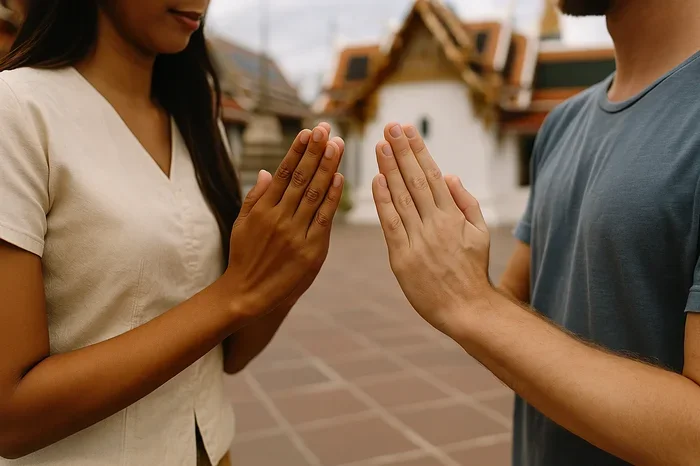
The wai is the traditional Thai greeting and gesture of respect. To perform a wai, place your hands together in a prayer-like position and bow slightly. The higher your hands and the deeper your bow, the more respect you show.
When apologizing, a wai adds a layer of sincerity that words alone cannot convey. Pair it with “khaf hak kha” or “khaf hak khrap,” and your apology will feel complete. You do not need to use a deep wai for casual situations. A slight bow with hands at chest level works perfectly for everyday apologies.
Smiling Through Apologies
Thais use smiles as a powerful social tool. A warm, genuine smile during an apology softens the moment and shows that you mean well. It does not mean you are not serious. Rather, it shows that you want to maintain harmony and move past the mistake.
If you ever feel unsure about how to react after an apology, smile. It is one of the most universal signs of goodwill, and Thai people respond to it immediately. Combined with the right words and a slight wai, a smile can turn even the most awkward moment into a positive connection.
Using Humor to Lighten Things Up
Sometimes, a sincere apology is not enough to shake off the awkwardness. That is where humor comes in. A well-placed joke can break the tension and remind everyone that the mistake was minor. If you have ever shared jokes to tell your crush, you know how a little laughter can change the entire mood of a conversation.
Thai people love humor, and they appreciate someone who can make them laugh after a small mishap. Of course, timing matters. Use humor only for minor mistakes, not for serious offenses. A lighthearted comment like “I am so clumsy today” paired with a smile shows that you do not take yourself too seriously.
You can also keep a few fun icebreakers ready for casual settings. Sharing a funny good joke to tell a girl or a lighthearted comment can turn an uncomfortable moment into a memorable one. Just make sure the joke is respectful and appropriate for the situation. Thai culture values kindness, and your humor should reflect that.
When Humor Works and When It Does Not
Here is a simple guide to help you decide when humor is appropriate after an apology:
- Use humor when: You spill a drink, forget a name, arrive late, or make a minor social faux pas.
- Avoid humor when: The situation involves someone’s feelings, property, or safety. In these cases, stick to a sincere and direct apology.
Common Mistakes to Avoid When Apologizing in Thai
Even with the best intentions, you can trip up when apologizing in a foreign language. Here are some common mistakes that learners make, and how to avoid them.
Overusing Formal Language
Using “khaf hak” with polite particles in every situation can sound overly stiff. Thai people switch between formal and casual language depending on the context. With friends, a casual “khaw thot” feels more natural. Save the formal version for elders, strangers, or professional settings.
Ignoring the Politeness Particles
Forgetting to add “kha” or “khrap” at the end of your apology is a common mistake. These particles are not optional. They signal politeness and respect. Without them, your apology might sound blunt or even rude, even if your words are technically correct.
Skipping the Wai
While the wai is not mandatory in every situation, skipping it entirely in a serious apology can feel incomplete. A small wai shows that you are putting in effort and genuine care. It is a simple gesture that speaks volumes about your respect for the other person.
Apologizing Too Much
It might sound strange, but over-apologizing can create awkwardness. Thai people prefer a balanced approach. One sincere apology followed by a positive comment or a smile is more effective than repeating “sorry” multiple times. Quality matters more than quantity.
Quick Tips for Remembering Thai Apology Phrases
Memorizing new phrases can feel overwhelming, but these tips make it easier and even fun.
- Write them down: Keep a small notebook or use your phone to jot down “khaf hak” and its variations. Review them daily.
- Use flashcards: Apps like Anki or Quizlet let you create digital flashcards. Review them during your commute or while waiting in line.
- Practice with a partner: Find a Thai friend or language exchange partner and practice apologizing in real conversations.
- Watch Thai shows: Pay attention to how characters apologize in Thai dramas or sitcoms. You will pick up natural expressions quickly.
- Set daily reminders: Set a phone alarm that says “Practice your Thai apology!” once a day. Small, consistent habits lead to big results.
Frequently Asked Questions
What is the most common way to say sorry in Thai?
The most common way is “khaf hak” (ขอโทษ). Add “kha” for women or “khrap” for men to make it polite. This phrase works in almost every situation, from casual to formal.
Is Thai a tonal language, and does it affect apologies?
Yes, Thai has five tones, and the tone changes the meaning of words. However, Thai people are very forgiving of pronunciation mistakes. Focus on being clear and sincere, and your apology will be understood and appreciated.
Can I use humor after apologizing in Thai?
Absolutely, but only for minor mistakes. A light joke or playful comment can ease tension after small mishaps. For serious situations, stick to a sincere and direct apology without humor.
Do I need to perform the wai gesture when apologizing?
The wai is not mandatory in every situation, but it adds a strong layer of sincerity. A slight bow with hands at chest level is perfect for everyday apologies. Use a deeper wai for formal or serious apologies.
What does “kreng jai” mean, and how does it relate to apologies?
“Kreng jai” means being considerate of others’ feelings. It is a core Thai value that shapes how people apologize and forgive. Understanding kreng jai helps you choose the right tone and approach in different situations.
How can I practice Thai apology phrases effectively?
Use flashcards, practice with a language partner, watch Thai shows, and set daily reminders. Consistent, short practice sessions are more effective than long study marathons. Repetition builds natural recall over time.
Conclusion
Learning how to say sorry in Thai is a valuable skill that opens doors to deeper connections and smoother interactions. From the universal “khaf hak” to the softer “khaw thot,” you now have a toolkit of phrases that cover every situation. Pair these words with a genuine smile, a respectful wai, and the right tone, and you will navigate Thai social life with confidence.
Remember, Thai people value sincerity over perfection. Your effort to speak their language, even imperfectly, will be appreciated more than you know. Practice these phrases regularly, stay mindful of cultural nuances, and do not be afraid to laugh at yourself when things go wrong. With time and patience, apologizing in Thai will feel as natural as breathing.
So the next time you make a mistake, do not freeze. Take a breath, say “khaf hak kha” or “khaf hak khrap,” and watch the tension melt away. You have got this, and every apology is a chance to show respect and build trust in the beautiful Thai culture.
Frequently Asked Questions
What is how to say sorry in thai?
how to say sorry in thai is an important topic with many practical applications.