
Introduction
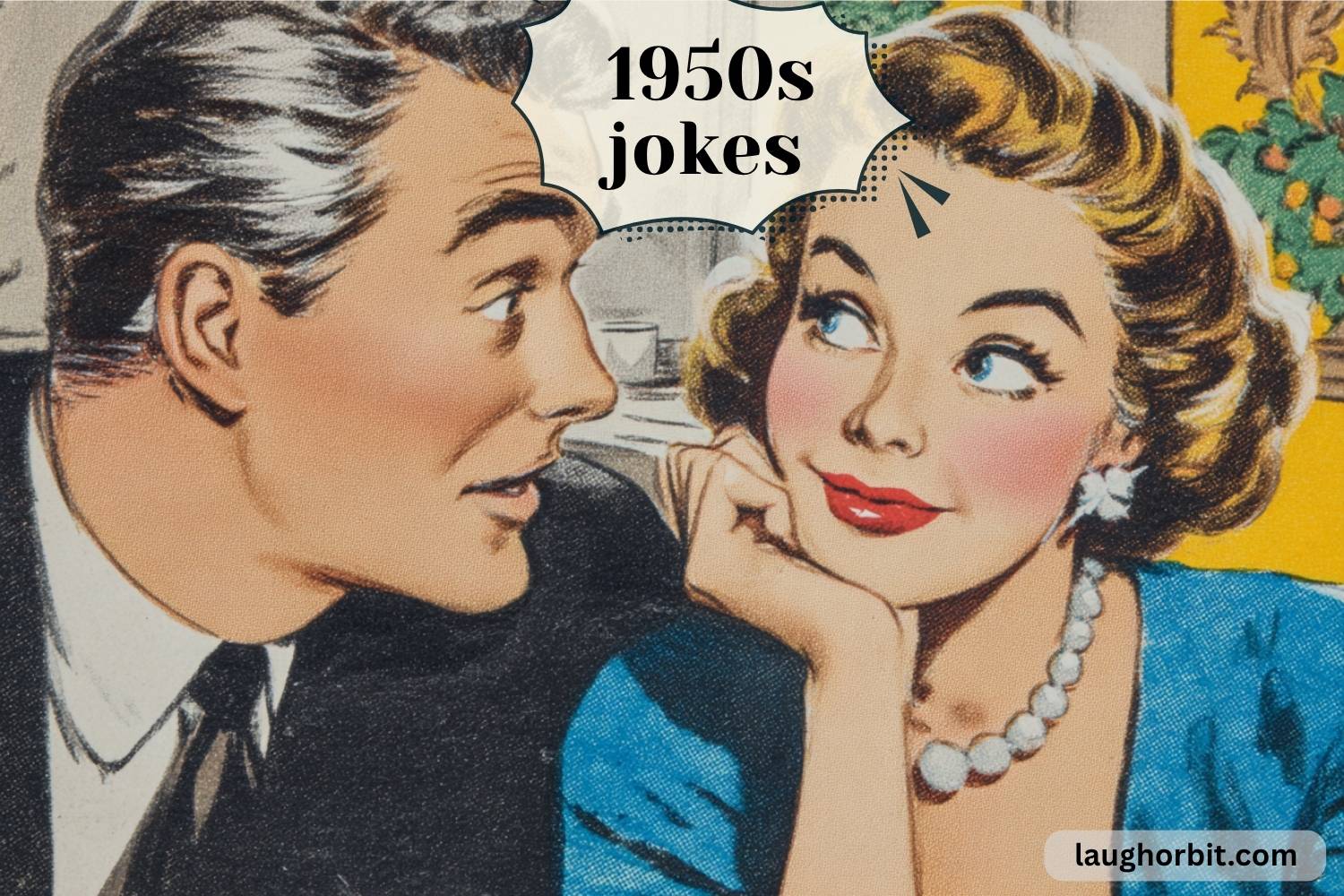
The 1950s were a happy time for simple laughs and big smiles. People shared jokes at home, at school, and with friends outside. These jokes were easy to remember and fun to tell. You did not need fancy words to make someone laugh. A good joke could light up the whole room.
This post brings together many kinds of 1950s jokes, from silly and corny ones to short one-liners. Kids, parents, and even grandparents could all enjoy the same laughs. The jokes here feel friendly and warm, like sitting together and having fun. If you like clean humor and classic giggles, these jokes are a great way to smile, relax, and enjoy a little old-school joy.
Funny 1950s Jokes That Still Make People Laugh
The 1950s were full of sock hops, milkshakes, and big smiles. These jokes come from a time when humor was clean, silly, and easy to share. Get ready for laughs that still feel fun today.
Why did the 1950s kid bring a ladder to school?
Because he heard the grades were going up.
Why did Dad love his 1950s radio so much?
It always knew the right tune to play.
Why did the sock hop stop early?
Someone twisted the wrong record.
Why did the 1950s mom smile at the oven?
Dinner was cooking and so were the jokes.
Why did the milkshake blush?
It saw the soda pop fizz.
Why did the teenager carry a comb everywhere?
You never know when hair needs fixing.
Why did the jukebox feel proud?
Everyone kept picking its songs.
Why did the 1950s car go slow?
It did not want to spill the root beer.
Why did Dad read the newspaper twice?
The jokes were that good.
Why did the phone ring only once?
Everyone listened real fast back then.
Why did the drive-in movie make people laugh?
The speakers were louder than the jokes.
Why did the TV have a tiny screen?
Big laughs did not need big pictures.
Why did the kid love comic strips?
They were funny before breakfast.
Why did the diner cook smile all day?
The grill flipped jokes too.
Why did the soda jerk laugh at work?
Every drink had a twist.
Why did the 1950s dad wear a tie at home?
Even jokes dressed nice.
Why did the record player spin so much?
It liked going around in circles.
Why did the school bell sound happy?
It loved telling jokes between classes.
Why did the family sit close to the radio?
The jokes were warm.
Why did the kid save his pennies?
Funny comics cost a dime.
Why did the hat stay on tight?
The punchlines were strong.
Why did the ice cream melt fast?
It could not stop laughing.
Why did the teacher laugh in class?
The chalk wrote a joke.
Why did the couch creak so much?
Too many laughs jumping on it.
Why did the 1950s mom clap her hands?
The joke landed just right.
Why did the clock tick louder?
It wanted attention too.
Why did the dog wag its tail at the TV?
Even pups liked funny shows.
Why did the family eat dinner late?
The jokes kept coming.
Why did everyone smile in the photo?
Someone told a good joke first.
Best 1950s Jokes From the Golden Age of Humor
The 1950s are often called the golden age of simple laughs. These jokes were shared at dinner tables, schools, and shops. They are easy to get, fun to tell, and perfect for anyone who loves classic humor.
Why did the 1950s dad smile at his shoes?
They were polished just like his jokes.
Why did the TV antenna wiggle?
It was trying to catch the funny part.
Why did the kid laugh at breakfast?
The cereal box told a joke.
Why did the family love Sunday dinners?
The jokes came with dessert.
Why did the radio host clear his throat?
The punchline was coming.
Why did the jukebox glow?
It felt happy being picked.
Why did the diner booth squeak?
Too much laughing and sliding.
Why did the teacher pause mid-lesson?
The class joke was too good.
Why did the milkman grin?
Every delivery had a laugh.
Why did the comic page fold itself?
It was shy but funny.
Why did the dad tap the table?
The joke needed a drumroll.
Why did the kids rush home after school?
Funny shows were waiting.
Why did the ice cream truck slow down?
The jokes needed time.
Why did the clock smile at noon?
Lunch jokes were best.
Why did the living room feel loud?
Everyone laughed at once.
Why did the family dog bark once?
He liked the punchline.
Why did the record skip?
It laughed too hard.
Why did the kid read signs out loud?
Even signs sounded funny.
Why did the radio laugh back?
Good jokes echo.
Why did the chair rock so much?
Laughter shook it.
Why did the soda fizz louder?
It heard a joke.
Why did the parents smile quietly?
They already knew the joke.
Why did the newspaper smell fresh?
The jokes were new.
Why did the kids giggle in line?
Someone whispered a joke.
Why did the lamp shine brighter?
It liked funny moments.
Why did the dad wink after talking?
The joke was done.
Why did the house feel warm?
Laughs filled it.
Why did bedtime take longer?
The jokes would not stop.
Classic 1950s Jokes Kids and Adults Both Enjoy
These jokes worked for everyone, from kids with short pants to adults with long days. They are clean, clear, and full of heart. You can tell them at home, at school, or just for fun.
Why did the kid laugh at the door?
It had a funny knock.
Why did Dad read the joke twice?
It got better each time.
Why did the chalkboard smile?
The joke was written big.
Why did the kid share his lunch?
The joke came with it.
Why did Mom laugh while sewing?
The thread tickled her funny bone.
Why did the bell ring early?
It could not wait.
Why did the family car honk once?
It heard a good joke.
Why did the kid clap alone?
The joke deserved it.
Why did the clock stop ticking?
It was listening.
Why did the teacher grin at recess?
The kids told a joke.
Why did the book fall open?
The funny page called it.
Why did the sandwich look happy?
It was part of lunch laughs.
Why did the dog tilt its head?
The joke confused it.
Why did the radio play soft music?
The joke needed space.
Why did the family couch dip?
Too many laughs sat there.
Why did the window shake?
Laughter hit it.
Why did the kid whisper a joke?
Quiet laughs were fun too.
Why did the milk glass slide?
It laughed itself over.
Why did the shoes tap the floor?
The joke had rhythm.
Why did the parents nod together?
They shared the laugh.
Why did the cat stay still?
It was listening.
Why did the room feel bright?
Smiles filled it.
Why did the joke end fast?
It hit just right.
Why did the kid smile alone?
The joke stayed in his head.
Why did the table creak?
Laughter leaned on it.
Why did bedtime feel late?
Jokes delayed sleep.
Why did the light switch click twice?
It liked the joke.
Why did everyone sigh happy?
Good laughs do that.
Clean 1950s Jokes With Old-School Fun
Back in the 1950s, jokes were clean and kind. No mean words, no tricks, just good fun. These jokes feel safe, friendly, and easy to share with anyone who likes a simple laugh.
Why did the kid wave at the mirror?
The joke waved back.
Why did Dad laugh at the tie rack?
It held funny stories.
Why did the kitchen smell good?
Laughter mixed with food.
Why did the radio hum?
It was happy.
Why did the kid giggle at math?
The numbers lined up funny.
Why did Mom smile at the sink?
The joke washed over her.
Why did the chair scoot back?
The laugh was strong.
Why did the door close softly?
The joke needed quiet.
Why did the family lean in?
The punchline was close.
Why did the floor creak once?
It reacted late.
Why did the clock chime slow?
It enjoyed the moment.
Why did the nap wait?
The joke woke everyone.
Why did the kid tap his foot?
He felt the laugh.
Why did the lamp flicker?
It blinked at the joke.
Why did the room feel cozy?
Kind laughs do that.
Why did the radio click off?
The joke ended strong.
Why did the table stay still?
It heard enough.
Why did the smile last long?
Clean jokes stick.
Why did the kid nod fast?
He got it.
Why did the parents chuckle soft?
Old jokes felt nice.
Why did the dog sigh?
The laugh tired him.
Why did the book close gently?
The joke was done.
Why did the spoon rattle?
It laughed too.
Why did the house feel calm?
Happy jokes passed through.
Why did the kid grin wide?
The joke fit him.
Why did the sound fade slow?
Good laughs linger.
Why did the night feel light?
Smiles stayed up.
Why did the laugh echo?
It wanted more.
Short 1950s Jokes With Big Laughs
These jokes are quick, simple, and straight to the point. In the 1950s, short jokes were perfect for school halls, kitchens, and sidewalks. Small words, big laughs, and easy smiles for everyone.
Why did the kid laugh fast?
The joke was short.
Why did Dad grin quick?
He got it.
Why did the radio pause?
Punchline time.
Why did the clock tick once?
That was enough.
Why did the kid snort?
Oops moment.
Why did the chair squeak?
Surprise laugh.
Why did Mom smile small?
She liked it.
Why did the dog bark once?
Funny sound.
Why did the bell ring sharp?
Joke landed.
Why did the light blink?
It reacted.
Why did the room hush?
Then laugh.
Why did the kid clap once?
Perfect timing.
Why did the spoon drop?
Too funny.
Why did the radio click?
End joke.
Why did the smile stay?
Good one.
Why did the table shake?
Oops laugh.
Why did Dad nod?
Approved.
Why did the kid gasp?
Did not expect it.
Why did the laugh pop?
Like soda.
Why did the clock smile?
On time.
Why did the floor creak?
Late laugh.
Why did the kid giggle?
Still funny.
Why did the door stop?
Listening.
Why did the air feel light?
Short jokes help.
Why did the laugh bounce?
Echo fun.
Why did Mom chuckle?
Cute joke.
Why did the night feel bright?
Smiles stayed.
Why did the joke end fast?
That was it.
Why did everyone nod?
Good laugh.
Vintage 1950s Jokes From a Simpler Time
Life in the 1950s moved slower, and so did the jokes. People laughed without rushing and shared smiles face to face. These vintage jokes feel cozy, friendly, and perfect for anyone who misses simple fun.
Why did the old clock smile on the wall?
It remembered better times.
Why did the kid laugh at the porch?
So many jokes were told there.
Why did Dad rock in his chair?
The joke rocked too.
Why did the radio crackle softly?
It held old laughs.
Why did the family table feel full?
Stories sat with dinner.
Why did the kid wave at neighbors?
They shared jokes daily.
Why did the sidewalk hear laughs?
Kids walked and joked.
Why did the mailbox squeak?
Funny letters came.
Why did the living room glow?
Warm laughs filled it.
Why did the dog nap happy?
He heard jokes all day.
Why did Mom hum while cooking?
The joke stayed with her.
Why did Dad smile at the paper?
The funny page was back.
Why did the lamp stay on late?
The jokes kept going.
Why did the kid sit still?
Listening hard.
Why did the window fog?
Laughter warmed it.
Why did the radio volume drop?
Quiet jokes hit best.
Why did the house creak gently?
Old laughs lived there.
Why did the smile feel easy?
No rush needed.
Why did the chair stay put?
It liked the moment.
Why did bedtime come slow?
Jokes delayed sleep.
Why did the laugh sound soft?
Kind times did that.
Why did the porch light glow?
Evening jokes arrived.
Why did the kid sigh happy?
Good laugh done.
Why did the floor feel warm?
Steps of joy.
Why did the night feel calm?
Smiles settled in.
Why did the laugh echo light?
Simple times.
Why did the clock tick easy?
No hurry.
Why did everyone smile back then?
Life felt lighter.
Family-Friendly 1950s Jokes Everyone Can Share
These jokes were made for families sitting together, sharing food and stories. Kids, parents, and grandparents could all laugh without worry. They are sweet, safe, and perfect for bringing people closer.
Why did the family laugh together?
The joke fit all.
Why did the kid tell Mom first?
She loved jokes.
Why did Dad laugh slow?
He liked to enjoy it.
Why did the table hear secrets?
Jokes were shared there.
Why did the dog stay close?
He felt included.
Why did the radio sound cheerful?
Family time started.
Why did the kid repeat the joke?
Everyone smiled again.
Why did Mom clap once?
Good punchline.
Why did the chair scoot in?
It wanted to listen.
Why did the room feel full?
Laughter filled space.
Why did the clock pause?
Family moment.
Why did the kid grin wide?
Everyone laughed.
Why did Dad clear his throat?
Joke time.
Why did the lamp shine steady?
Warm vibes.
Why did the family lean close?
Shared laughs.
Why did the dog wag slow?
Happy crowd.
Why did the kid laugh early?
He knew it.
Why did Mom nod along?
She got it too.
Why did the room stay quiet after?
Smiles lingered.
Why did the laugh feel safe?
Kind humor.
Why did the kid look proud?
Good joke told.
Why did Dad chuckle soft?
Perfect timing.
Why did the house feel gentle?
Family jokes do that.
Why did dinner last longer?
More laughs.
Why did bedtime wait?
One more joke.
Why did the smile stay long?
Shared joy.
Why did the night feel warm?
Family laughs.
Why did everyone relax?
Good jokes help.
Popular 1950s Jokes Told in Diners and Drive-Ins
Diners and drive-ins were full of chatter, food, and laughs. People shared jokes between bites and movies. These jokes feel like clinking glasses, humming radios, and smiles under bright lights.
Why did the diner booth laugh?
It heard everything.
Why did the milkshake shake more?
The joke hit.
Why did the cook grin?
Orders came with laughs.
Why did the server pause?
Punchline time.
Why did the spoon tap the glass?
Joke reaction.
Why did the jukebox glow bright?
Funny mood.
Why did the fries disappear fast?
Laugh breaks.
Why did the napkin crumple?
Spit-take moment.
Why did the booth slide?
Too much laughing.
Why did the radio in the car hum?
Drive-in vibes.
Why did the speaker crackle?
Funny scene.
Why did the soda fizz loud?
Big laugh.
Why did the car window fog?
Crowd reaction.
Why did the kid laugh mid-bite?
Oops moment.
Why did the tray rattle?
Surprise joke.
Why did the lights feel warm?
Happy crowd.
Why did the car horn beep once?
Funny timing.
Why did the movie pause?
Jokes won.
Why did the fries cool slow?
Talk time.
Why did the table shake?
Group laugh.
Why did the straw bend?
Too much fun.
Why did the kid lean out?
Sharing laughs.
Why did the screen glow softer?
Quiet jokes.
Why did the car door stay open?
One more joke.
Why did the laughter bounce?
Open space.
Why did the night feel alive?
Food and jokes.
Why did everyone smile leaving?
Good times.
Why did the diner buzz?
Laugh energy.
Retro 1950s Jokes With Classic American Humor
These jokes feel like checkered floors, baseball radios, and friendly hellos. Retro humor from the 1950s was proud, playful, and easy to love. It brought people together with simple laughs and big hearts.
Why did the flag wave harder?
It liked the joke.
Why did the kid laugh at the parade?
Funny signs.
Why did Dad tip his hat?
Good humor.
Why did the radio announcer smile?
Crowd laughed.
Why did the porch feel busy?
Stories flowed.
Why did the kid run home fast?
To share a joke.
Why did the chair scrape loud?
Big laugh move.
Why did the sidewalk echo?
Footsteps and laughs.
Why did the paperboy grin?
Funny headlines.
Why did the yard feel bright?
Smiles spread.
Why did the kid point and laugh?
Classic gag.
Why did the car idle longer?
Chat time.
Why did the clock chime proud?
On cue.
Why did the fence hear secrets?
Jokes leaned there.
Why did the house feel open?
Welcoming laughs.
Why did Dad laugh deep?
Good old humor.
Why did Mom smile knowing?
She heard it before.
Why did the kid laugh loud?
It landed.
Why did the street feel alive?
People joked.
Why did the dog bark happy?
Crowd mood.
Why did the radio tune stick?
Funny line.
Why did the porch swing move?
Laughter rocked it.
Why did the smile spread fast?
Classic charm.
Why did the joke feel proud?
American style.
Why did the laugh last long?
Good roots.
Why did everyone nod?
They got it.
Why did the night feel friendly?
Shared humor.
Why did the memory stay?
Retro laughs stick.
Corny 1950s Jokes That Are So Bad They’re Good
Corny jokes were a big hit in the 1950s. People loved laughs that made them groan and smile at the same time. These jokes are cheesy, silly, and perfect for folks who enjoy harmless fun that feels warm and familiar.
Why did the 1950s dad tell the same joke again?
It still worked.
Why did the kid laugh late?
He finally got it.
Why did the room go quiet first?
The joke needed space.
Why did Mom shake her head smiling?
She saw it coming.
Why did Dad clear his throat big?
Corny joke alert.
Why did the chair squeak twice?
Double groan.
Why did the kid groan loud?
That was the joke.
Why did the table hear a sigh?
Classic corny moment.
Why did the laugh come slow?
Thinking time.
Why did the dog tilt its head?
Confused laugh.
Why did the radio pause awkward?
Bad joke beat.
Why did the kid clap anyway?
Still funny.
Why did Mom smile polite?
She loved it.
Why did Dad nod proud?
Mission done.
Why did the room fill with groans?
Corn level high.
Why did the clock tick louder?
Waiting for laughs.
Why did the kid repeat it?
Even worse.
Why did the chair slide back?
Secondhand cringe.
Why did the laugh sound mixed?
Groan plus grin.
Why did the joke linger?
So bad.
Why did Dad smile bigger?
He won.
Why did the kid cover his face?
Too corny.
Why did Mom laugh anyway?
Love beats logic.
Why did the silence break fast?
Groans ended.
Why did the room feel light?
Corny fun works.
Why did the joke age well?
Simple charm.
Why did everyone smile after?
Good bad joke.
Why did the moment stick?
Corny memories.
Silly 1950s Jokes Full of Wholesome Laughs
Silly jokes ruled the 1950s. They were playful, gentle, and easy to love. These jokes feel like childhood fun, where laughing too loud was okay and everyone joined in without thinking too hard.
Why did the kid giggle nonstop?
The joke tickled him.
Why did Dad laugh with his eyes?
Pure joy.
Why did Mom cover her mouth?
Too silly.
Why did the chair wobble?
Laugh attack.
Why did the radio sound happy?
Good mood.
Why did the dog spin once?
Fun energy.
Why did the kid clap fast?
Excited laugh.
Why did the table shake a bit?
Group silliness.
Why did Dad laugh twice?
It hit again.
Why did Mom laugh soft?
Sweet joke.
Why did the room feel playful?
Silly vibes.
Why did the kid jump?
Surprise funny.
Why did the clock tick fast?
Laugh rush.
Why did the couch dip?
Everyone laughed.
Why did the smile spread quick?
Contagious fun.
Why did the dog bark happy?
Joined in.
Why did the kid repeat the punchline?
Loved it.
Why did the laugh echo light?
Big joy.
Why did the lamp glow warm?
Happy space.
Why did Dad slap his knee?
Classic silly move.
Why did Mom shake her head?
Too funny.
Why did the room buzz?
Laughs everywhere.
Why did the joke feel soft?
Wholesome fun.
Why did the kid grin wide?
Pure silliness.
Why did the laughter stop short?
Breath break.
Why did the silence feel nice?
Happy tired.
Why did the night feel fun?
Silly memories.
Why did everyone relax?
Good laughs help.
Why did the joke stay sweet?
Kind humor.
Old-Fashioned 1950s Jokes With Timeless Charm
Old-fashioned jokes from the 1950s never try too hard. They are calm, clever, and full of charm. These jokes feel polite and friendly, like a warm hello from the past that still makes people smile today.
Why did the gentleman tip his hat?
Nice joke.
Why did the lady smile soft?
She enjoyed it.
Why did the kid stand straight?
Respectful laugh.
Why did Dad chuckle low?
Good manners.
Why did Mom smile calm?
Charming humor.
Why did the room feel neat?
Clean laughs.
Why did the clock chime gentle?
Perfect timing.
Why did the radio sound smooth?
Easy joke.
Why did the chair stay still?
Listening closely.
Why did the kid nod polite?
Got the point.
Why did the laugh feel quiet?
Classy fun.
Why did the table feel steady?
No wild jokes.
Why did Dad smile slow?
He liked the style.
Why did Mom laugh light?
Simple joy.
Why did the room glow soft?
Warm charm.
Why did the joke end clean?
No fuss.
Why did the kid grin small?
Sweet moment.
Why did the dog rest calm?
Peaceful vibe.
Why did the laugh linger?
Gentle touch.
Why did the silence feel nice?
Comfort time.
Why did the chair creak once?
Late laugh.
Why did the smile stay polite?
Old ways.
Why did the joke feel safe?
Timeless humor.
Why did Dad nod firm?
Approved.
Why did Mom fold her hands?
Nice ending.
Why did the room feel balanced?
Good taste.
Why did the moment last?
Charm sticks.
Why did everyone smile back?
It worked.
Famous 1950s Jokes People Still Quote Today
Some 1950s jokes were so good that people kept telling them again and again. These jokes stuck around because they were easy to remember, fun to repeat, and perfect for sharing anytime someone needed a quick laugh.
Why did everyone remember that joke?
It was simple.
Why did Dad quote it again?
Still funny.
Why did the kid repeat it at school?
Big hit.
Why did Mom smile before it ended?
She knew it.
Why did the laugh come fast?
Good timing.
Why did the room react quick?
Classic line.
Why did the joke travel far?
Easy share.
Why did people nod hearing it?
Recognized it.
Why did the smile show early?
Famous punchline.
Why did Dad pause before speaking?
Build-up worked.
Why did the kid whisper it?
Secret laugh.
Why did the radio crowd laugh loud?
They knew it.
Why did the joke feel familiar?
Old favorite.
Why did the laugh pop right away?
No thinking needed.
Why did Mom quote it back?
Team laugh.
Why did the room feel united?
Shared humor.
Why did the kid feel proud?
Good delivery.
Why did the joke stay alive?
Passed down.
Why did the smile come back?
Repeat value.
Why did Dad grin wide?
Worked again.
Why did the laugh feel warm?
Nostalgia hit.
Why did the silence break fast?
Known ending.
Why did the joke fit anywhere?
Always works.
Why did people still love it?
Timeless fun.
Why did the line stick?
Easy words.
Why did the moment feel shared?
Group memory.
Why did the joke win?
Always does.
Why did everyone remember?
Classic status.
1950s Joke One-Liners That Crack You Up
One-liners are the fastest laughs from the 1950s. Short, snappy, and easy to remember, these jokes were perfect for school halls, dinner tables, and friendly chats. Blink and you might miss them, so stay sharp.
- Sock hop rule – Dance fast before the record ends.
- TV advice – Sit close so the screen feels bigger.
- Radio secret – Laugh louder than the static.
- Milkshake logic – Thick shakes mean slow sipping.
- Homework tip – Finish fast so jokes start early.
- Comic rule – Read the funny part twice.
- Hair goal – Comb it till it shines.
- Phone rule – Answer quick before it stops ringing.
- Diner trick – Fries taste better with laughs.
- Bedtime plan – One more joke always wins.
- School rule – Recess jokes are the best jokes.
- Car advice – Roll slow and wave big.
- Snack wisdom – Cookies smile when shared.
- Clock tip – Time flies during laughs.
- Chair warning – Sit tight, jokes may shake you.
- Lunch rule – Save the best joke for last.
- Living room law – Laughs echo louder inside.
- Dog rule – Wag if it sounds funny.
- Radio break – Jokes sound better after music.
- Smile trick – Start small, end big.
- Table rule – No laughing with full mouth.
- Night plan – Laugh now, sleep later.
- Movie tip – Funny lines beat loud scenes.
- Family rule – Everyone gets a turn to joke.
- Snack break – Chips crunch louder during laughs.
- Quiet rule – Silence means joke incoming.
- Old saying – Simple jokes last longer.
- Happy fact – Laughter never goes out of style.
Conclusion
1950s jokes remind us that laughter does not need to be loud or fancy to be good. Simple words, kind humor, and shared smiles can make any day brighter. These jokes still work today because happy laughs never grow old.